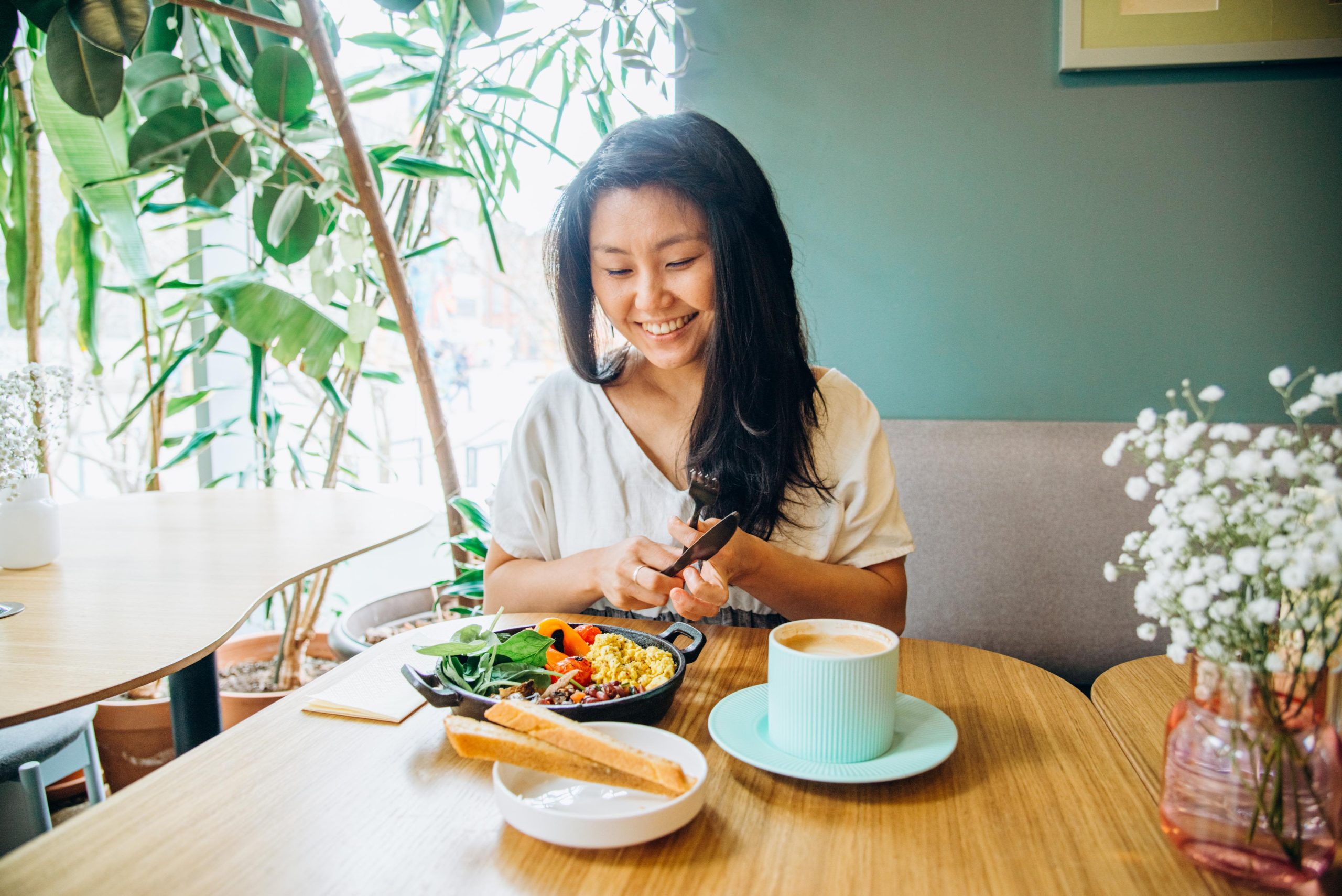
Walking into a restaurant often triggers a familiar pattern: scanning the menu quickly, ordering what sounds good, and eating faster than intended while chatting or checking a phone. Meals disappear before the body has time to register fullness, and the experience that should feel satisfying somehow ends with that vague feeling of having eaten too much or not really tasted the food at all. Over time, I discovered a simple mindful eating trick that works in virtually any restaurant setting, whether it’s a casual café, a busy fast-food spot, or an upscale dining room. It doesn’t require special diets, complicated rules, or awkward behavior at the table. It simply shifts how attention is used during the meal, and that small change transforms the entire dining experience.
The Restaurant Challenge Most People Face
Restaurant environments are built for stimulation. The smell of sizzling dishes drifts through the air, colorful photos on menus trigger cravings, and conversations flow quickly between friends or family members. Plates arrive hot and appealing, often in portions larger than what most people eat at home. All of these factors encourage people to dive in immediately and eat quickly without noticing how their body actually feels.
I noticed that restaurant meals often moved at a completely different pace than meals prepared at home. Food arrived quickly, conversation moved fast, and bites followed one another almost automatically. By the time I paused long enough to check in with my appetite, half the plate was already gone. That pattern made it easy to eat past the point of comfort.
Mindful eating changes that experience, but many people assume it requires silence, meditation, or intense concentration that doesn’t fit naturally in a restaurant. The truth is that mindful eating can be incredibly simple. A single habit can shift the pace of a meal without making the experience awkward or restrictive.
The One Trick That Changes Everything
The mindful eating trick that works almost anywhere is simple: pause for one full breath before the first bite and one breath between bites.
This pause may sound small, but it completely resets the rhythm of the meal. The breath acts like a natural speed bump that prevents the rapid, automatic eating that often happens in restaurants. Instead of rushing from bite to bite, the meal begins to unfold at a more relaxed pace.
During the pause before the first bite, I take a moment to notice the food in front of me. The aroma, the color, the way the dish is arranged on the plate all become part of the experience. That single breath turns the start of the meal into a moment of appreciation rather than a rushed reaction.
Between bites, the same breath gives the body time to catch up with the stomach. Signals of fullness take time to travel, and when bites come too quickly those signals arrive late. The breathing pause slows the meal just enough to allow those signals to appear before overeating happens.
Why This Trick Works So Well
Human eating behavior is strongly influenced by pace. When food is eaten quickly, the brain doesn’t receive fullness signals in time to guide portion size. This delay often leads to eating more than intended, especially when portions are large.
A breathing pause naturally slows the rhythm of eating without forcing strict rules about how much food should be consumed. Instead of counting calories or limiting certain foods, the focus shifts toward paying attention. The body becomes the guide rather than external restrictions.
Restaurants also tend to encourage social eating, which means conversation can easily distract from the meal itself. The breathing pause anchors attention briefly before each bite, allowing awareness to return to the act of eating even while conversation continues. It’s subtle enough that no one at the table even notices it happening.
Another reason this trick works well is that breathing is already part of the body’s natural rhythm. Unlike complicated mindful eating exercises, a breath feels completely normal and easy to incorporate. That simplicity makes it sustainable across different dining situations.
Turning the First Bite Into an Experience
The first bite of a meal often disappears without much thought. Hunger drives the initial reaction, and people frequently rush through those early moments of eating. Slowing down for a breath before the first bite changes that dynamic completely.
Taking a moment to observe the plate activates curiosity. The textures and aromas of the dish become more noticeable, which naturally enhances flavor perception. Instead of eating mechanically, the senses become involved in the meal.
Restaurants spend significant effort designing dishes to look appealing, yet those visual details are often ignored. The mindful pause allows those elements to become part of the dining experience. Even simple foods can feel more satisfying when attention is directed toward them.
That first breath also resets the pace of the meal from the very beginning. Rather than starting fast and trying to slow down later, the meal begins with calm awareness. This small shift sets the tone for everything that follows.
The Power Of Eating Slightly Slower
Speed plays a surprisingly large role in how meals feel afterward. Rapid eating can lead to discomfort, bloating, or the strange feeling of being overly full but still unsatisfied. Slowing the pace changes how the body processes food and how the mind experiences the meal.
The breathing pause naturally lengthens the time between bites. This doesn’t require counting seconds or putting down utensils deliberately. The breath alone creates enough space for the body to process what has already been eaten.
Over the course of an entire meal, those small pauses add up. The overall eating time increases, allowing the stomach and brain to communicate more effectively. Many people discover that they feel satisfied with less food simply because they gave their body time to respond.
Eating slightly slower also improves digestion. The body processes food more efficiently when meals unfold at a relaxed pace. That benefit often becomes noticeable after only a few mindful restaurant meals.
Staying Present In Busy Dining Environments
Restaurants can be noisy and full of distractions. Conversations, background music, and bustling servers create an atmosphere where attention easily drifts away from the plate. Mindful eating doesn’t require eliminating those distractions, but it does involve returning attention to the meal periodically.
The breathing pause functions like a reset button for awareness. Each breath brings attention back to the plate without interrupting conversation or social interaction. The meal remains enjoyable and social while still allowing moments of presence.
Phones are another major distraction in restaurants. Many people instinctively check notifications or scroll through social media between bites. The breathing pause offers a different pattern that keeps the focus on the meal rather than the screen.
Over time, this habit strengthens the ability to stay present in busy environments. Instead of being overwhelmed by stimulation, the mind learns to anchor itself in simple sensory experiences like taste and aroma.
Letting Hunger And Fullness Guide The Meal
Diet culture often turns restaurant meals into a stressful balancing act. People try to estimate calories, avoid certain foods, or compensate for earlier meals. These strategies frequently disconnect people from their body’s natural hunger and fullness signals.
Mindful eating brings attention back to those signals. The breathing pause creates space to notice subtle shifts in appetite as the meal progresses. Hunger gradually fades, satisfaction grows, and fullness eventually appears.
Many restaurant dishes come in portions larger than necessary for one person. Without pauses, it’s easy to eat everything on the plate automatically. The breathing rhythm encourages natural stopping points where the body can assess whether more food is actually needed.
That awareness allows decisions about portion size to happen calmly rather than through strict rules. Sometimes finishing the plate feels right, and sometimes stopping earlier feels better. The body becomes the guide.
Enjoying Flavor More Deeply
Taste is often lost in the rush of restaurant eating. Bites disappear quickly, and subtle flavors barely register before the next bite arrives. Slowing down reveals how complex many dishes actually are.
The breathing pause enhances sensory awareness. After taking a bite, there’s time to notice how flavors evolve while chewing. Ingredients that previously blended together suddenly become distinguishable.
Texture also becomes more noticeable when eating slowly. The crispness of vegetables, the creaminess of sauces, and the tenderness of proteins all contribute to the experience. These details are easy to miss when eating quickly.
Restaurants are designed to deliver enjoyable food experiences, and mindful eating allows those experiences to unfold more fully. The same dish can feel richer and more satisfying simply because attention is directed toward it.
Handling Large Portions Without Stress
One of the biggest challenges of restaurant dining is portion size. Many establishments serve meals that could easily feed two people, yet social habits encourage finishing everything on the plate. This pressure often leads to overeating.
The mindful breathing trick naturally reduces that pressure. Because the meal unfolds more slowly, fullness signals appear earlier in the process. Instead of suddenly realizing that the plate is empty, the body communicates satisfaction gradually.
At that point, the decision to continue eating becomes more conscious. Some bites may still be enjoyed purely for taste, while others may feel unnecessary. That clarity removes the feeling of losing control around large portions.
Taking leftovers home becomes a normal option rather than a sign of restraint. The goal shifts from finishing everything to enjoying the meal in a way that feels good physically.
Social Dining Without Awkwardness
Many people worry that mindful eating might make them seem slow or overly focused on food during social meals. The breathing pause avoids that problem because it blends naturally into conversation and table etiquette.
Conversations already create natural pauses between bites. Adding a single breath simply extends those pauses slightly without drawing attention. Friends and family continue enjoying the meal together without noticing any deliberate technique.
Mindful eating can actually enhance social dining experiences. When meals unfold at a relaxed pace, conversations often feel more enjoyable and less rushed. People linger longer at the table and savor both the food and the company.
This balance allows mindfulness to exist within a social setting rather than replacing it. The meal becomes both a sensory experience and a shared moment with others.
Building The Habit Over Time
Like any new habit, mindful eating becomes easier with repetition. The breathing pause may feel unusual during the first few meals, especially for people who are used to eating quickly. With practice, it begins to feel natural.
Restaurant visits provide perfect opportunities to practice this technique because they occur in environments where eating quickly is common. Each meal becomes a chance to strengthen the habit.
Gradually, the breathing pause becomes automatic. The body begins to expect that brief moment before each bite. At that point, mindful eating requires almost no effort.
The habit can eventually extend beyond restaurants into meals at home or snacks during the day. What began as a simple trick evolves into a broader pattern of eating with awareness.
A Simple Shift With Powerful Results
Mindful eating doesn’t require complicated systems or strict food rules. A single breath before and between bites can reshape the entire dining experience. That pause slows the pace of eating, enhances flavor, and allows the body’s natural signals to guide how much food is needed.
Restaurants often encourage quick, automatic eating, but this small shift introduces calm awareness without disrupting the social atmosphere. Meals become more satisfying, portions feel easier to manage, and the experience of dining becomes richer.
The beauty of this trick lies in its simplicity. No special equipment, diets, or restrictions are required. Just one breath at a time, turning each restaurant meal into an opportunity to enjoy food more fully and leave the table feeling comfortable and satisfied.
